AI in Packaging Design: How Designers Are Using AI Without Losing Creativity
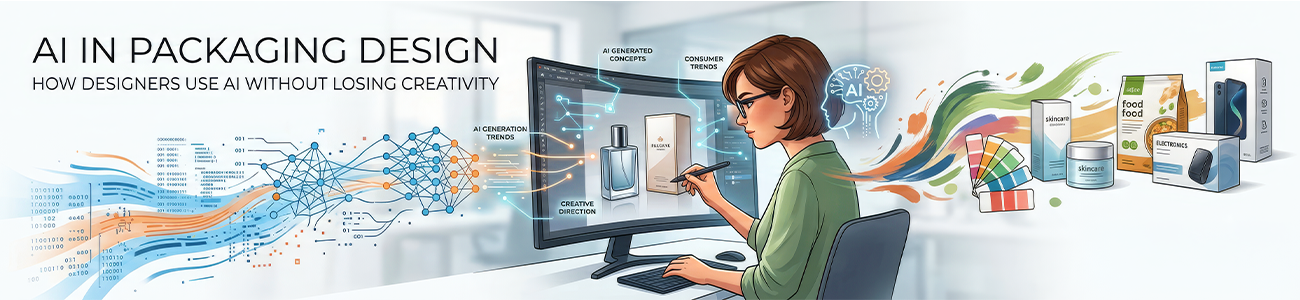
The world of product packaging design is
evolving faster than ever. Artificial Intelligence (AI) has entered almost
every creative industry, and packaging is no exception. From generating concept
ideas to analyzing consumer preferences, AI is helping designers work smarter,
faster, and more efficiently.
However, one question continues to spark debate:
Will AI replace packaging designers?
The answer is simple no.
Instead, AI is becoming a powerful creative assistant that
helps professional designers streamline their workflow while leaving the most
important aspects of product packaging design in human hands.
Creativity, storytelling, branding, emotional connection, and strategic
thinking remain uniquely human skills that no algorithm can fully replicate.
In this article, we’ll explore how AI is transforming product
packaging design, where it adds value, where it falls short, and why
experienced designers continue to play the most important role in creating
packaging that truly connects with consumers.
The Evolution of Product
Packaging Design
Years
ago, product packaging design focused mainly on protecting products and
displaying essential information. Today, packaging has become one of the most
influential marketing tools for any business.
Consumers
often make purchasing decisions within seconds. Attractive packaging
immediately captures attention, communicates quality, and builds trust.
Modern
product packaging design now combines:
·
Brand identity
·
Consumer psychology
·
Market research
·
Sustainability
·
Visual storytelling
·
Print production knowledge
·
Regulatory compliance
This
growing complexity has created opportunities for AI to assist designers but not
replace them.
What Is AI in Product
Packaging Design?
Artificial
Intelligence refers to software capable of analyzing large amounts of
information and generating creative suggestions based on patterns and data.
Within
product packaging design, AI can help by:
·
Generating design concepts
·
Suggesting color palettes
·
Creating mood boards
·
Producing packaging mockups
·
Organizing design assets
·
Automating repetitive design tasks
·
Speeding up brainstorming sessions
Instead
of replacing creativity, AI allows designers to spend more time refining ideas
and developing stronger brand experiences.
How AI Helps Professional
Packaging Designers
1. Faster Concept Development
One of the biggest advantages
of AI is speed.
Instead of spending hours
creating multiple rough concepts, designers can quickly generate several visual
directions. These concepts become inspiration rather than final artwork.
Professional designers then
evaluate these ideas and transform them into meaningful product packaging
design solutions tailored to the brand.
2. Better Consumer Insights
AI can analyze market trends,
purchasing behavior, and consumer preferences far more quickly than manual
research.
This information helps designers
understand:
·
Popular colors
·
Preferred typography
·
Emerging design styles
·
Packaging trends
·
Consumer expectations
These insights support smarter product
packaging design decisions while keeping the creative vision in human
hands.
3. Improved Workflow Efficiency
Many repetitive tasks consume
valuable design time.
AI can automate:
·
Background removal
·
Image enhancement
·
Layout suggestions
·
File organization
·
Content generation
·
Design variations
As a result, designers can
dedicate more energy to creativity, branding, and innovation in product
packaging design.
Where Human Creativity Still Wins
Although
AI offers impressive capabilities, it cannot replace the experience of a
skilled packaging designer.
Successful
product packaging design depends on understanding emotions, culture,
storytelling, and brand personality.
Designers
ask important questions such as:
·
What emotions should customers feel?
·
How should the brand be positioned?
·
What makes this product different?
·
How will the packaging influence purchasing
decisions?
·
What printing method best suits the design?
These
strategic decisions require human judgment, industry knowledge, and creative
thinking.
Why Packaging Is More Than
Attractive Graphics
Many
people assume packaging is simply about creating beautiful artwork.
In
reality, professional product packaging design involves balancing
aesthetics with functionality.
Designers
must consider:
·
Material selection
·
Printing limitations
·
Shelf visibility
·
Label compliance
·
Product protection
·
Manufacturing processes
·
Cost efficiency
·
User experience
AI
may generate visually appealing concepts, but it cannot fully understand
production constraints or practical business requirements without expert
guidance.
AI Cannot Replace Brand
Storytelling
Every
successful product tells a story.
Packaging
communicates:
·
Brand values
·
Product quality
·
Target audience
·
Premium positioning
·
Sustainability efforts
·
Company personality
Great
product packaging design creates emotional connections that encourage
customers to trust a brand.
Storytelling
requires empathy, cultural understanding, and originality qualities that AI can
support but not genuinely create.
The Importance of Originality
Brands
want packaging that stands out in crowded retail environments.
AI
generates ideas by learning from existing content, while professional designers
create unique solutions tailored to each business.
Original
product packaging design helps companies:
·
Increase brand recognition
·
Improve customer loyalty
·
Differentiate from competitors
·
Build long-term trust
·
Support premium pricing
This
originality remains one of the strongest advantages of experienced designers.
Sustainable Product Packaging
Design
Sustainability
has become a major priority across the packaging industry.
Consumers
increasingly expect environmentally responsible packaging.
Professional
product packaging design now considers:
·
Recyclable materials
·
Minimal packaging waste
·
Eco-friendly inks
·
Lightweight structures
·
Reusable packaging
·
Reduced environmental impact
AI
can analyze sustainable material options and optimize layouts, but designers
ultimately make balanced decisions that meet branding, production, and
environmental goals.
AI Is a Creative Partner
Not a Creative Replacement
The
most successful design studios are not choosing between AI and human
creativity.
They
are combining both.
AI
handles repetitive processes while designers focus on:
·
Brand strategy
·
Creative direction
·
Packaging innovation
·
Consumer psychology
·
Visual communication
·
Production expertise
This
partnership produces stronger product packaging design outcomes than
either could achieve alone.
How Businesses Benefit
Companies
working with professional packaging designers who responsibly use AI enjoy
several advantages.
These
include:
·
Faster project turnaround
·
More concept exploration
·
Improved workflow
·
Consistent branding
·
Better design decisions
·
Higher production accuracy
·
Cost-effective revisions
·
Enhanced customer engagement
The
result is product packaging design that performs well both visually and
commercially.
Choosing the Right
Packaging Design Partner
When
selecting a packaging design agency, businesses should look beyond attractive
visuals.
A
professional partner understands:
·
Brand positioning
·
Packaging strategy
·
Print production
·
Label regulations
·
Consumer behavior
·
Material selection
·
Market trends
·
Long-term brand growth
The
best agencies use AI as a supporting tool while relying on experienced
designers to deliver original, strategic product packaging design
solutions.
The Future of Product
Packaging Design
Artificial
Intelligence will continue to influence the packaging industry through
automation, data analysis, and workflow improvements.
However,
the future belongs to designers who know how to combine technology with
imagination.
Consumers
don’t remember packaging because it was generated by AI.
They
remember packaging because it tells a story, creates an emotional connection,
and represents a brand they trust.
That
is the true power of exceptional product packaging design.
Conclusion
AI is reshaping the creative process, but it is not
replacing creativity itself.
The future of product packaging design lies in
collaboration between intelligent technology and experienced designers. AI can
generate ideas, automate repetitive tasks, and provide valuable insights, but
only human designers can transform those insights into meaningful brand
experiences that resonate with customers.
At RainbowGraph, we believe technology should enhance
creativity not replace it. By combining innovative tools with strategic
thinking, industry expertise, and original design, we create product
packaging design solutions that are visually compelling, production-ready,
and built to strengthen your brand in competitive markets.
Whether you’re launching a new product or refreshing an existing one, investing in thoughtful product packaging design is an investment in your brand’s long-term success.