Milk Packaging Design Trends: What Consumers Expect in 2026
How Modern Dairy Brands Are Using Packaging Design to Win Consumer Trust
Milk is
one of the most frequently purchased FMCG products in India. Yet, when
consumers stand in front of a refrigerator filled with dozens of milk brands,
their purchase decision often comes down to one thing: milk packaging design.
In 2026,
consumers expect far more than a simple milk pouch. They want packaging that
communicates freshness, trust, nutrition, sustainability, convenience, and
brand authenticity at a single glance.
As a
leading milk packaging design company, Rainbowgraph has worked with multiple
dairy brands across India, creating packaging solutions that help products
stand out in highly competitive retail environments. From minimalist milk pouch
designs to farm-fresh storytelling concepts, the evolution of milk packaging
design reflects changing consumer expectations and purchasing behaviour.
In this
article, we explore the latest milk packaging design trends shaping the dairy
industry in 2026 and demonstrate how successful dairy brands are implementing
these trends through effective packaging.
Why Milk Packaging Design Is More Important Than
Ever
Milk is
often considered a low-involvement purchase. Consumers spend only a few seconds
evaluating products before making a decision.
This
makes milk packaging design one of the most powerful marketing tools available
to dairy brands.
A
successful milk packaging design helps:
- Build consumer trust
- Improve shelf visibility
- Communicate product quality
- Differentiate milk variants
- Increase brand recall
- Support dairy branding
efforts
- Drive repeat purchases
As
competition increases, brands that invest in professional dairy packaging
design gain a significant advantage in both retail and distribution channels.
1. Clean and Minimal Milk
Packaging Design
One of
the biggest trends in milk packaging design is simplicity.
Consumers
increasingly associate clean packaging with purity, freshness, and quality.
Example: Milky Plus Curd Packaging
The Milky
Plus packaging uses:
- Strong blue and white colour
contrast
- Minimal visual clutter
- Large product naming
- Clear hierarchy
- High readability
This type
of milk packaging design immediately communicates freshness and trust while
ensuring strong visibility inside refrigeration units.
Why Consumers Prefer Minimal Packaging
Modern
consumers want:
- Quick product identification
- Easy readability
- Less visual noise
- Premium appearance
As a
result, minimalist milk packaging design continues to dominate dairy shelves
across India.
2. Farm to Consumer
Storytelling Through Packaging
Consumers
increasingly want to know where their milk comes from.
This has
created a strong demand for storytelling-focused dairy packaging design.
Example: Elanadu Cow Milk Packaging
The
Elanadu milk pouch showcases:
- Traditional dairy farming
- Rural landscape
illustrations
- Farmer imagery
- Fresh milk collection scenes
This
approach creates an emotional connection with consumers by highlighting
authenticity and local sourcing.
Why Storytelling Works
Consumers
associate farm imagery with:
- Freshness
- Purity
- Traditional quality
- Ethical dairy practices
- Local trust
In 2026,
storytelling-driven milk packaging design will continue growing as brands seek
deeper consumer engagement.
3. Strong Colour Coding for
Milk Variants
Modern
dairy brands often offer multiple milk categories:
- Full Cream Milk
- Standardised Milk
- Toned Milk
- Double Toned Milk
- Skimmed Milk
Without
effective colour differentiation, consumers become confused.
Example: Aadhan Standardised Milk
The
Aadhan packaging uses green as the dominant colour.
The green
palette instantly differentiates the product from other variants while
reinforcing freshness and natural dairy farming associations.
Example: Aone Toned Milk
The Aone
pouch combines:
- Blue for dairy trust
- Green for freshness
- White milk splash elements
This creates
instant recognition for toned milk consumers.
Benefits of Colour Based Milk Packaging Design
- Faster product
identification
- Reduced purchase confusion
- Improved shelf visibility
- Stronger brand architecture
Colour
coding has become an essential component of modern milk packaging design.
4. Premium Dairy Packaging
Design
Consumers
are increasingly willing to pay more for products that appear premium.
This has
encouraged dairy brands to upgrade their milk packaging design strategies.
Example: Mohak Full Cream Milk Packaging
The Mohak
design demonstrates premium positioning through:
- Large central branding
- Elegant typography
- Minimal layout
- Strong visual focus
- Clean white space
The
design creates a premium perception without overcomplicating the packaging.
Premium Packaging Elements Consumers Notice
- Sophisticated typography
- Balanced layouts
- High-quality imagery
- Minimal clutter
- Strong branding
Premium dairy
packaging design helps brands justify higher pricing while improving consumer
trust.
5. Shelf Impact Is Becoming
a Competitive Advantage
A milk
pouch typically gets less than three seconds to attract attention.
This
makes shelf impact a crucial component of milk packaging design.
What Creates Shelf Impact?
Large Product Naming
Consumers
should instantly identify:
- Brand name
- Milk category
- Variant
High Contrast Colours
Blue,
green, and white remain dominant in dairy packaging because they communicate:
- Freshness
- Purity
- Trust
Strong Brand Visibility
Consumers
should recognize the brand even from a distance.
All
successful milk packaging design projects prioritize strong shelf visibility.
6. Consumer Trust Through
Visual Transparency
Trust is
one of the strongest purchase drivers in dairy products.
Consumers
increasingly prefer packaging that clearly communicates:
- Milk type
- Fat percentage
- Nutritional value
- Processing methods
Example: Elanadu Cow Milk Packaging
The
packaging prominently displays:
- Homogenised
- Pasteurised
- Fat percentage
- SNF values
Such
information helps consumers make informed decisions while increasing brand
credibility.
Transparent
milk packaging design builds confidence and encourages repeat purchases.
7. Sustainability
Influences Packaging Decisions
Environmental
awareness continues to influence purchasing decisions.
Although
milk pouches remain the most practical format in India, consumers increasingly
appreciate brands that communicate sustainability initiatives.
Modern milk
packaging design increasingly includes:
- Reduced ink coverage
- Simplified structures
- Efficient printing
techniques
- Recyclability information
Sustainable
dairy packaging design is expected to become a major differentiator in the
coming years.
8. Regional Identity
Creates Stronger Brand Loyalty
Consumers
often trust local dairy brands more than national alternatives.
Packaging
that reflects local culture can create stronger emotional connections.
Example: Elanadu Cow Milk
The rural
Kerala-inspired illustration style creates familiarity among consumers.
Why Regional Design Works
It
communicates:
- Authenticity
- Local sourcing
- Community connection
- Traditional dairy values
Regional
storytelling has become an important trend in modern milk packaging design.
9. Human Cantered Dairy
Branding
Consumers
connect with people more than products.
Modern dairy
branding increasingly incorporates:
Farmers
Dairy workers
Family imagery
Rural communities
The
Elanadu milk packaging demonstrates this trend by showing the milking process
and farm environment.
This
approach humanizes the brand and strengthens emotional engagement.
10. Future Trends in Milk
Packaging Design
Looking
ahead to 2026 and beyond, consumers are expected to demand:
Smart Packaging
QR codes
Traceability systems
Digital brand experiences
Sustainable Packaging
Recyclable materials
Reduced plastic usage
Eco-friendly production
Premium Branding
Modern typography
Minimalist layouts
Premium visual hierarchy
Convenience
Better pouch functionality
Improved storage experience
Consumer-friendly design
Brands that
adopt these trends early will strengthen their market position.
What Makes a Successful
Milk Packaging Design?
The best milk packaging design combines:
Strong shelf visibility
Consumer trust
Brand recognition
Product differentiation
Farm-fresh storytelling
Premium appearance
Clear communication
Emotional connection
When
these elements work together, packaging becomes much more than a container, it
becomes a powerful sales tool.
Conclusion
The
future of milk packaging design is driven by consumer expectations for trust,
simplicity, authenticity, and premium branding.
The dairy
brands that succeed in 2026 will be those that understand packaging as a
strategic marketing asset rather than just a protective pouch.
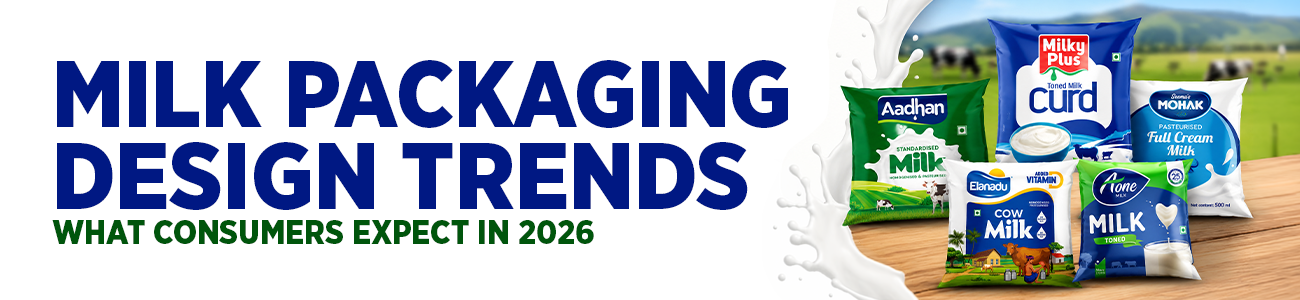
Projects
such as Milky Plus Curd, Elanadu Cow Milk, Mohak Full Cream Milk, Aadhan
Standardised Milk, and Aone Toned Milk demonstrate how thoughtful milk
packaging design can communicate freshness, build trust, create shelf impact,
and strengthen dairy brand identity.
For dairy
companies looking to grow in an increasingly competitive market, investing in
professional dairy packaging design is no longer optional, it is essential.