Why Should India Care About America's Elections?
From Washington to the World: How the
2026 US Midterm Elections Could Impact India's FMCG Market and Global Packaging
Design Industry
Introduction
A
political decision made in the United States can influence businesses thousands
of kilometers away.
From
international trade and crude oil prices to food exports, manufacturing costs
and consumer markets, American economic policies have a significant influence
on the global economy.
The
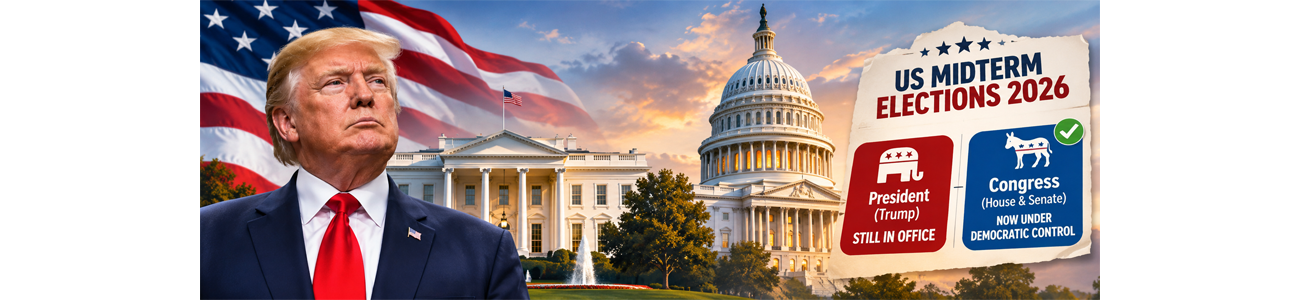
November 3, 2026 US midterm elections brought a major political development.
The Democratic Party won control of both the House of Representatives and the
Senate, creating a significant challenge for President Donald Trump's
administration.
However,
Trump remains President. The midterm elections do not remove him from office.
Instead, they change the balance of political power in Congress.
For
India, this development raises several important questions.
1.
Could
international trade become more predictable?
2.
Will
Indian food exporters benefit?
3.
Could
India's FMCG industry experience growth?
4.
What
does this mean for the FMCG & Product packaging design industry?
For
businesses involved in Global FMCG Brand Designs, Branding & Packaging,
FMCG Brand Logo Designing and Packaging & Labelling, these developments
deserve attention.
Let's
examine the four major areas.
1.
What Is Happening in the United States Right Now?
A
Political Shift, not a Change of President
The
United States has two major political parties: Republicans and Democrats.
The
President serves a four-year term, while congressional elections take place
every two years.
Congress
consists of two chambers:
- House of
Representatives:
435 voting members.
- Senate: 100 members, with two
senators representing each state.
In
the November 2026 midterm elections, Democrats won control of both chambers.
This
means Trump's administration will face greater opposition when proposing
legislation, approving budgets and implementing certain government priorities.
However,
the President retains executive authority, including certain powers relating to
international trade and tariffs.
Why
Does This Matter?
Trump's
administration has used tariffs as an important economic and trade policy
instrument.
Tariffs
can protect domestic industries, but they can also increase import costs and
create uncertainty for international businesses.
With
Democrats controlling Congress, the administration may face greater scrutiny
over economic decisions, trade policies and government spending.
This
could influence America's relationship with important trading partners,
including India.
However,
a change in congressional control does not automatically mean that tariffs will
disappear or that international trade restrictions will be reversed.
The important takeaway: America has experienced a political shift, but the future of its trade policies will depend on negotiations, legislation and executive decisions.
2.
How Could the US Election Result Change Global Import and Export Markets, especially
in India?
America's
Economic Decisions Have Global Consequences
The
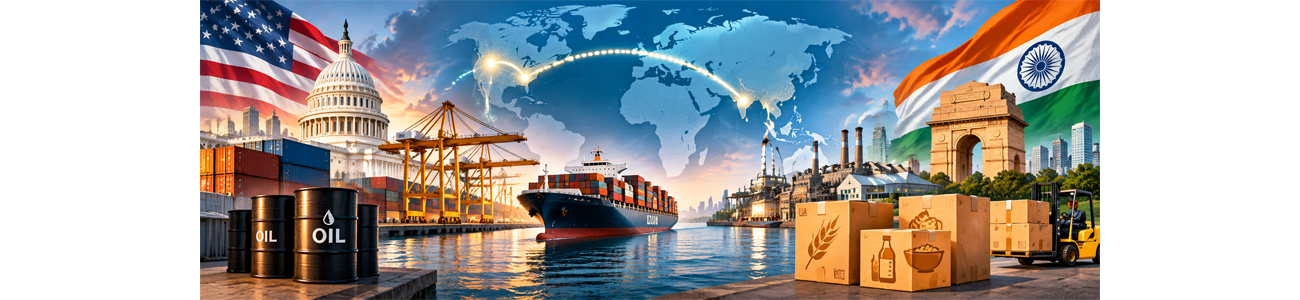
United States is one of India's most important international trading partners.
Indian
businesses export products such as pharmaceuticals, textiles, engineering
goods, agricultural products, processed foods and consumer goods.
At
the same time, Indian manufacturers depend on international suppliers for raw
materials, machinery, chemicals and packaging components.
Changes
in American trade policy can therefore influence Indian businesses in several
ways.
A.
Tariffs and International Trade
Tariffs
are taxes imposed on imported goods.
When
tariffs increase, imported products can become more expensive. This can make
exporters less competitive in overseas markets.
If
trade restrictions reduce, Indian manufacturers could find new opportunities to
compete internationally.
For
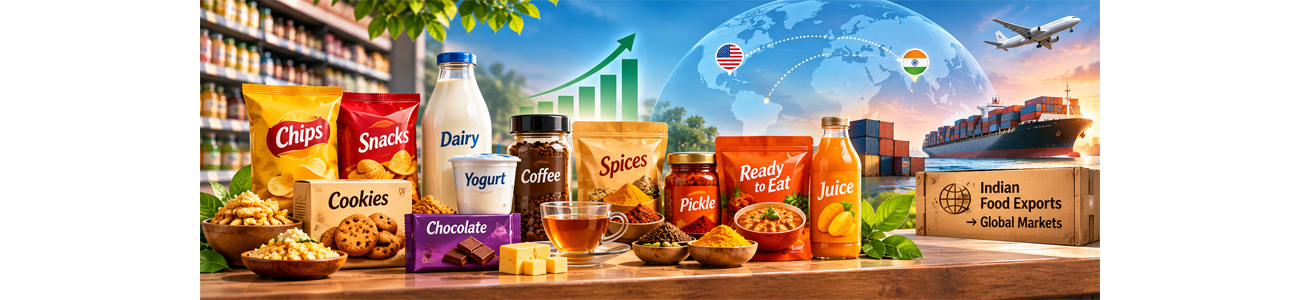
example, Indian food manufacturers exporting snacks, spices, tea, coffee and
ready-to-eat products could benefit from improved market access.
However,
India-US trade negotiations remain complex, involving tariffs, agricultural
market access and regulatory requirements.
Businesses
should not assume that the election automatically guarantees lower import
duties.
B.
Crude Oil Prices and Manufacturing Costs
India
imports a substantial share of its crude oil requirements.
Therefore,
international oil prices can influence transportation, manufacturing, energy
and logistics expenses.
Lower
oil prices could potentially benefit Indian businesses by reducing certain
operating costs.
This
is particularly relevant to FMCG manufacturers and packaging producers.
Plastic
packaging materials are linked to petrochemical supply chains, meaning changes
in energy and feedstock prices can influence material costs.
However,
crude oil prices do not directly determine every packaging material's price.
Paperboard, glass, aluminum and other materials have separate cost structures.
For
companies investing in Product packaging design, understanding material costs
is becoming increasingly important.
C.
Foreign Investment and Market Confidence
International
investors closely monitor political stability, economic growth and trade
relationships.
A
more predictable global business environment could encourage investment in
emerging markets such as India.
Potential
beneficiaries include food processing companies, manufacturers, logistics
providers and packaging businesses.
For
Indian brands, this could create opportunities to expand production, improve
distribution and enter international markets.
Strong
Branding & Packaging can help businesses establish recognition and
credibility in these markets.
Similarly,
Global FMCG Brand Designs must adapt to international consumer expectations
without losing their original identity.
The important takeaway: A more predictable international trade environment could benefit India, but actual business growth will depend on tariffs, commodity prices, currency movements and export demand.
3.
Will the US Election Result Be Good for India's Food and FMCG Market?
India's
Food FMCG Industry: An Opportunity for Growth
FMCG
stands for Fast-Moving Consumer Goods.
It
includes products purchased regularly by consumers, such as:
- Biscuits and bakery
products.
- Dairy products.
- Packaged snacks.
- Chocolates and
confectionery.
- Cooking oils.
- Tea and coffee.
- Ready-to-eat meals.
- Beverages.
- Personal care
products.
India
has a strong FMCG market supported by population growth, urbanization, changing
lifestyles, modern retail and increasing online shopping.
But
will the US election result make India's food FMCG market grow?
The
answer is that it could provide indirect benefits, but it does not guarantee an
immediate market boom.
A.
Potential Reduction in Manufacturing Costs
Food
manufacturers depend on agricultural ingredients, energy, transportation and
packaging materials.
If
global energy prices and certain input costs decline, manufacturers may benefit
from improved operating margins.
For
example, a packaged food company could experience lower logistics expenses or
better packaging procurement costs.
This
could create more flexibility for product innovation and marketing investments.
However,
food prices also depend on domestic agricultural production, weather
conditions, commodity availability and currency movements.
B.
Better Opportunities for Indian Food Exports
Indian
food products have considerable international potential.
Popular
export categories include:
- Indian spices and
spice mixes.
- Traditional snacks.
- Ready-to-eat meals.
- Tea and coffee.
- Rice-based products.
- Processed fruit and
vegetables.
- Confectionery.
However,
entering the American market requires compliance with relevant food safety,
ingredient declaration, nutritional labelling and allergen requirements.
This
creates an important opportunity for professional Branding & Packaging.
An
Indian food product entering an international supermarket needs more than an
attractive package.
It
needs clear communication, trustworthy branding, appropriate product
information and a visual identity suited to its target consumers.
This
is where Global FMCG Brand Designs become valuable.
A
brand developed for Indian consumers may require a different packaging strategy
for American consumers.
The
differences could include:
- Packaging language.
- Nutritional
information.
- Ingredient declarations.
- Allergen information.
- Pack sizes.
- Product claims.
- Visual communication.
Professional
Product packaging design helps brands manage these differences while
maintaining consistency.
C.
Will Indian FMCG Companies Become More Profitable?
Not
automatically.
FMCG
profitability depends on sales volumes, raw material costs, manufacturing
efficiency, distribution, competition and consumer purchasing power.
A
positive stock market reaction does not necessarily mean every food company
will experience increased sales.
Businesses
must continue investing in product quality, innovation, brand recognition and
distribution.
Strong
FMCG Brand Logo Designing can improve product recognition, while effective
Packaging & Labelling can communicate quality and build consumer trust.
For
growing Indian food businesses, working with a Leading Product Package
Designing Company in India can help create competitive brands for domestic and
international markets.
Our
outlook:
India's food FMCG industry could benefit from improved global trade conditions,
better export opportunities and lower selected input costs. However, domestic
consumption and business performance will remain the primary growth drivers.
4.
How Will the US Election Result Change the Global Product Packaging Design
Industry?
Politics,
Trade and Packaging: An Unexpected Connection
The
packaging industry may not appear directly connected to American politics.
However,
packaging depends on international supply chains, material costs,
manufacturing, trade regulations and consumer markets.
When
global economic conditions change, packaging manufacturers and FMCG brands may
need to reconsider their strategies.
For
the Product packaging design industry, this creates several potential
developments.
A.
Packaging Material Costs Could Change
Packaging
manufacturers use materials such as:
- Paper and paperboard.
- Corrugated board.
- Plastic films.
- PET and HDPE.
- Aluminum foil.
- Glass.
- Printing inks and
adhesives.
International
trade restrictions can influence the cost and availability of imported
materials.
If
trade conditions improve, manufacturers may have access to more competitive
suppliers.
If
restrictions increase, procurement costs could rise.
Therefore,
Product packaging design must balance creativity with material availability,
production feasibility and cost efficiency.
B.
Global FMCG Brands May Redesign Their Packaging Strategies
International
FMCG companies sell products across different countries.
A
single product may require multiple packaging versions depending on the
destination market.
For
example, a brand selling packaged food in India and the United States may need
different nutritional information, ingredient declarations, languages and
regulatory details.
This
increases the importance of adaptable Global FMCG Brand Designs.
Brands
need a consistent identity that can be adjusted for different countries.
Effective
Branding & Packaging makes it possible to maintain recognition while
adapting to local consumer expectations.
For
Indian exporters, this could create opportunities to develop internationally
competitive product identities.
C.
Packaging & Labelling Will Become More Important
Different
countries have different packaging regulations.
Food
exporters must consider ingredient declarations, allergens, nutritional
information, net quantity, country of origin and applicable product claims.
Indian
businesses exporting to the United States must follow relevant FDA
requirements.
European
markets have their own regulatory frameworks, while Indian manufacturers must
comply with applicable FSSAI and Legal Metrology requirements.
Consequently,
Packaging & Labelling is not simply a design activity. It is an important
part of international market readiness.
Professional
Product packaging design requires collaboration between designers, food
technologists, manufacturers and regulatory specialists.
D.
Sustainability Will Influence Future Packaging
Sustainability
continues to influence packaging decisions across international markets.
Brands
are exploring:
- Recyclable packaging
materials.
- Reduced plastic usage.
- Mono-material flexible
packaging.
- Recycled-content
materials.
- Paper-based packaging
alternatives.
- Reusable packaging
systems.
- More efficient
packaging structures.
These
developments are not caused by one election. They reflect broader regulatory,
environmental and consumer trends.
For
Global FMCG Brand Designs, sustainability also creates a communication
challenge.
Brands
must communicate environmental benefits accurately without making misleading
claims.
E.
Branding Will Become a Competitive Advantage
As
international markets become more competitive, packaging plays an important
role in product differentiation.
Consumers
often make purchasing decisions based on visual identity, convenience,
perceived quality and brand recognition.
This
makes FMCG Brand Logo Designing, typography, color selection, product
photography and packaging architecture increasingly important.
A
well-developed brand identity helps products stand out on retail shelves and
digital shopping platforms.
For
Indian businesses targeting global markets, working with a Leading Product
Package Designing Company in India can help bridge the gap between local
product identity and international brand expectations.
The
future of Product packaging design will involve more than attractive graphics.
It will combine strategic branding, regulatory awareness, material innovation
and consumer understanding.
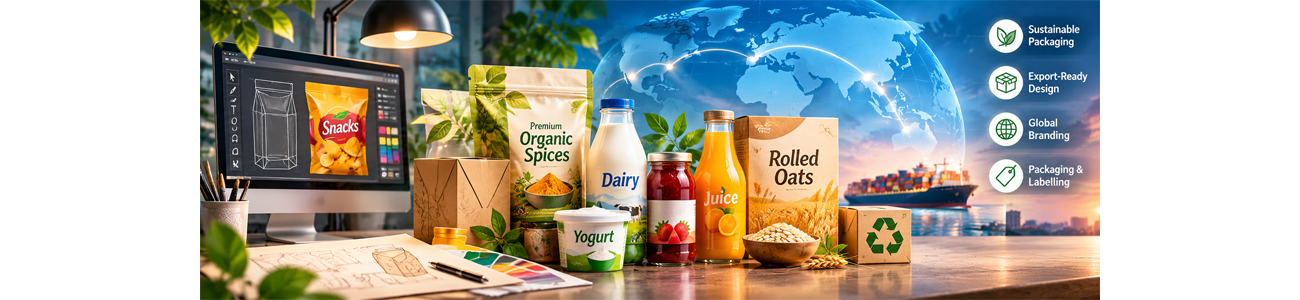
Rainbowgraph
Perspective: Why Indian Brands Should Think Globally
The
changing international business environment creates opportunities for Indian
manufacturers to expand beyond domestic markets.
But
international expansion requires more than a good product.
Brands
need a clear identity, attractive packaging, regulatory awareness and strong
consumer communication.
At
Rainbowgraph, we believe Product packaging design is a strategic business
investment, not merely a visual exercise.
Through
Branding & Packaging, Global FMCG Brand Designs and FMCG Brand Logo
Designing, businesses can develop stronger identities and build recognition
across markets.
A
professional approach to Packaging & Labelling also helps brands prepare
for different retail and regulatory environments.
As
a Leading Product Package Designing Company in India, Rainbowgraph believes the
next generation of successful Indian FMCG brands will compete through product
quality, innovation and powerful brand experiences.
The
opportunity is particularly important for food manufacturers looking to
introduce regional Indian products to international consumers.
Whether
it is a traditional snack, dairy product, beverage or ready-to-eat meal, the
right combination of branding and packaging can help communicate its value.
Final
Verdict: Is This a Good Time for India's FMCG and Packaging Industry?
The
2026 US midterm elections have changed America's political balance.
The
consequences could extend into international trade, foreign investment,
commodity markets and Indian manufacturing.
For
India's food FMCG industry, potential opportunities include improved export
conditions, better investor confidence and reduced pressure on certain input
costs.
For
the global packaging industry, the opportunity lies in helping brands adapt to
changing supply chains, international regulations, sustainability expectations
and consumer preferences.
However,
there are no guaranteed outcomes. Lower tariffs, cheaper packaging materials
and higher FMCG sales cannot be assumed simply because of an election result.
Indian
manufacturers must remain adaptable and continue investing in quality,
innovation, branding and export readiness.
When
global markets change, brands must evolve too.
Because
a great product may attract attention, but effective packaging helps turn that
attention into brand recognition and consumer trust.
Rainbowgraph
– Building Brands Through Strategic Design.